In early December 2025, I had the pleasure of visiting the University of Perugia in Italy at the invitation of Professor Emiliano Lasagna from the Department of Agricultural, Food and Environmental Sciences.
During my visit, I delivered two research seminars that reflected the breadth of our group’s work at Texas A&M University on bridging modern omics technologies with practical applications.
The first talk, “Robust phenotyping of later life traits in the omics era: a case study of poultry fertility,” explored how high-resolution phenotyping and multi-omics integration can reveal the genetic and physiological basis of fertility traits in poultry, particularly those that emerge later in life. This work underscores the need for longitudinal and systems-level approaches to understand reproductive performance, a central driver of sustainability and efficiency in livestock production.
The second seminar, “Beyond the Genome: Mapping biological networks for livestock improvement,” addressed the growing importance of computational genomics approaches in modern livestock genomics. I discussed how we can move past single-gene perspectives to construct dynamic network models that characterize biological interactions shaping complex traits. These frameworks open new avenues for predictive breeding and for translating genomic data into measurable gains in health and productivity.
In addition to the talks, our discussions with Prof. Lasagna and his colleagues focused on expanding collaborative efforts in comparative genomics and biomarker discovery. The University of Perugia team is engaged in impressive work on indigenous livestock breeds, making our partnership especially valuable for exploring genotype–environment interactions and traits relevant to resilience and adaptation.
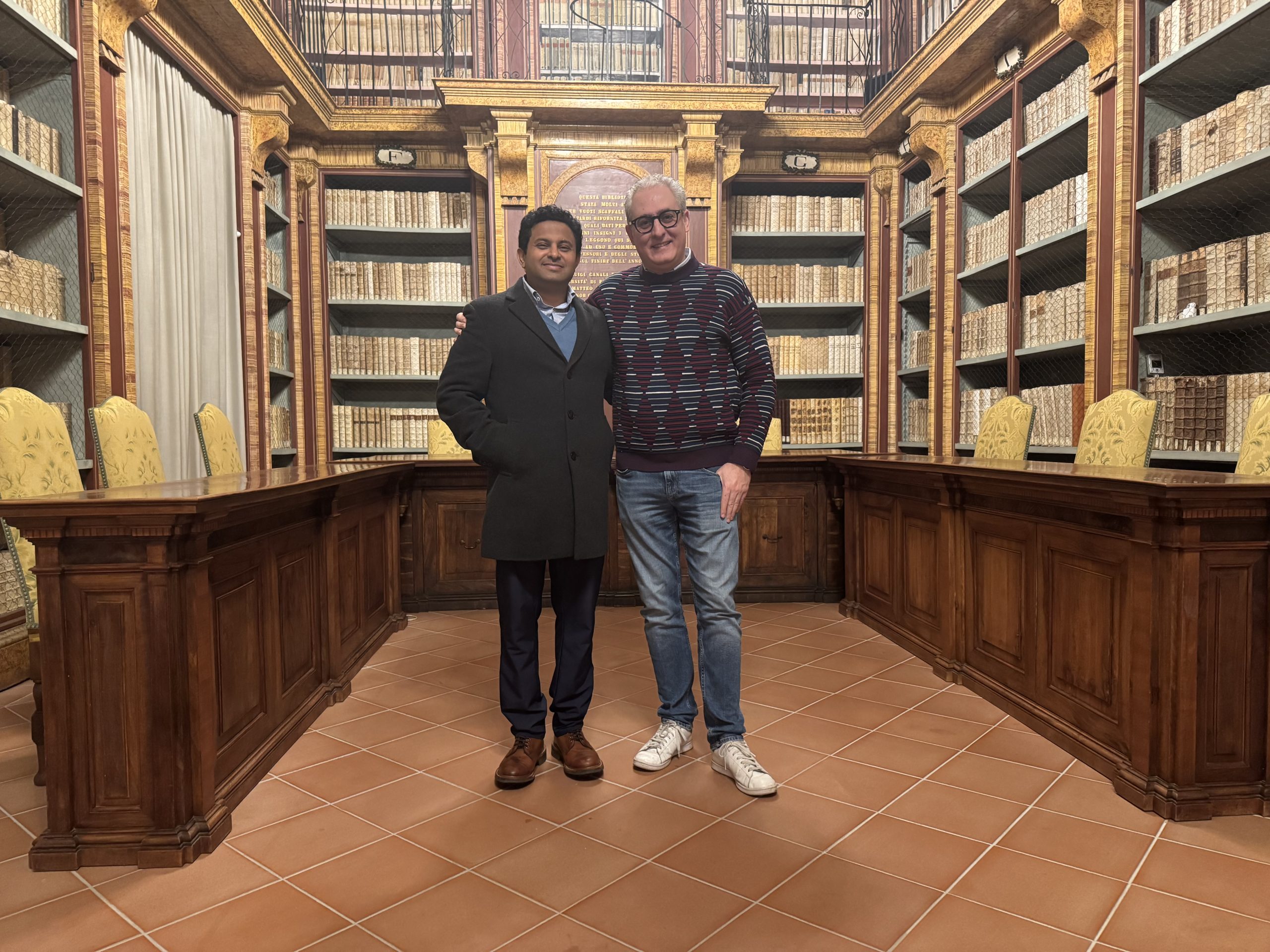


Beyond the academic exchange, the visit offered a chance to experience Perugia’s historic charm—its winding medieval streets, hillside views of Umbria, and the warmth and hospitality of the university community. These connections strengthen the international dimension of our lab’s mission and open doors to novel multidisciplinary research that integrates breeding science, functional genomics, and data-driven innovation.